
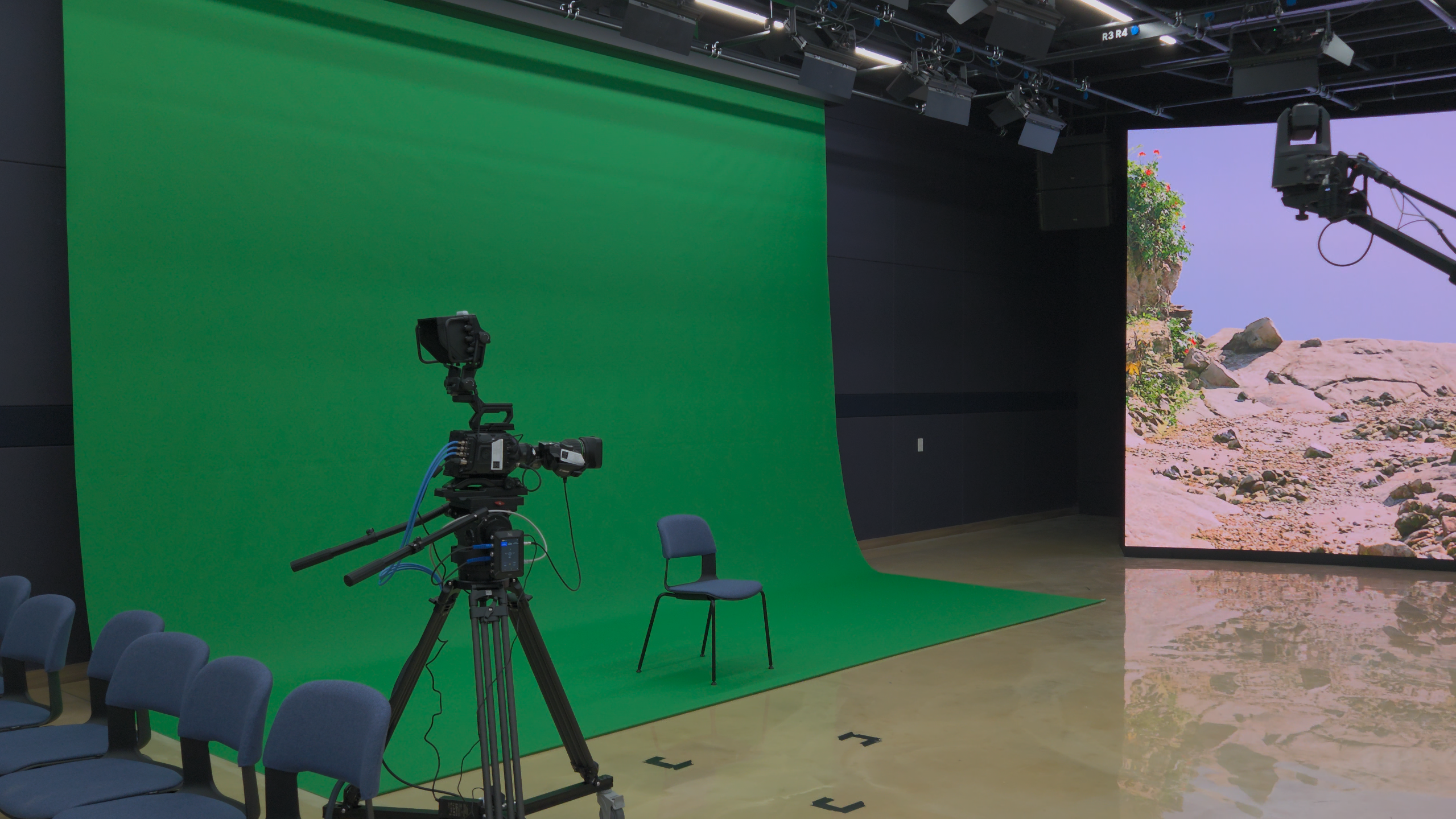
The background is created in different places
Both approaches can place a presenter inside a digital environment. With green screen, the camera photographs the presenter against a coloured backdrop. Software removes that backdrop and combines the camera image with a virtual background.
With LED, the virtual background appears on a physical display behind the presenter. The camera photographs the person and the displayed scenery together. This changes more than what people see on set: it changes which light is physically present during capture.
Green screen: the environment is composited
The virtual scenery does not physically illuminate the presenter just because it appears behind them in the finished picture. A sunset in the virtual background does not automatically cast warm light onto their face or reflect in their glasses. Those relationships need to be created with studio lighting, scene preparation and compositing.
Green screen still captures a real person through a real lens. The distinction is that light from the virtual background is added digitally, rather than passing through the lens during capture. A convincing result depends on matching the foreground and environment, as well as getting a clean key. Fine hair, translucent material and green spill need particular attention.
LED: the environment also becomes a light source
An LED wall emits light from the displayed environment into the physical space. That light can colour the presenter, contribute ambient illumination and appear in reflective surfaces. The camera receives light from the wall as well as the subject, so some relationships between foreground and background are captured together.
Lighting and reflections can therefore feel more naturally connected. The wall’s contribution depends on its size, content, position and brightness; additional studio lighting is still often needed. Tracked in-camera VFX also updates the rendered perspective with camera movement. Epic’s in-camera VFX overview explains these lighting, reflection and camera relationships.
What that means for picture quality
A well-executed LED setup can produce a more convincing integrated image, especially when the shot benefits from environmental light and reflections. Those interactions happen physically, instead of all needing to be matched in the composite. That can be a significant visual advantage.
It is not an automatic improvement for every shot. Display and camera behaviour, colour matching, synchronization and viewing angles still matter. A carefully lit green-screen production can look excellent. Compare the finished camera image under the conditions your show will actually use.
Which approach fits the show?
Green screen is worth evaluating when you need flexible virtual scenery and can provide a controlled keying space. LED is worth evaluating when visible scenery, environmental lighting and reflections are central to the intended picture, and the space and resources support the display setup.
Test the same presenter, reflective materials, camera movement and delivery format. Include preparation time and the crew needed to repeat the result. Choose the approach that gives your production a convincing, maintainable picture.